Table Of Content

For many design teams and creative folks, the idea of designing something with other people can be enough to make them shudder. But the design thinking process isn’t about “making the logo 10% bigger” or “using a different shade of blue.” It’s user- and solution-focused. Divergence and convergence is a human-centered design approach to problem-solving. It switches between expansive and focused thinking, giving you a process that balances understanding people’s problems and developing solutions. Design thinking is an extremely hands-on approach to problem-solving favoring action over discussion. Instead of hypothesizing about what your users want, design thinking encourages you to get out there and engage with them face-to-face.
Design Thinking in Practice: Research Methodology
Throughout the prototype stage, the proposed solutions may be accepted, improved, redesigned or rejected depending on how they fare in prototype form. You can read all about the prototyping stage of Design Thinking in our in-depth guide. Towards the end of the ideation phase, you’ll narrow it down to a few ideas with which to move forward. You can learn about all the most important ideation techniques in this guide. The process is characterized by the alternation of divergent and convergent thinking, typical of design thinking process.
Where can you find ideas for design thinking solutions?
It puts a focus on finding design solutions that get to the root of why a user or product problem occurs, rather than focusing on fixing the problem alone. Design thinking tends to be non-linear and iterative in its process to identify areas for improvement at each step of design. UX, UI and product designers may utilize design thinking to develop products and services that effectively address user needs. Design thinking is an iterative process where teams seek to understand user needs, challenge assumptions, define complex problems to solve, and develop innovative solutions to prototype and test. The goal of design thinking is to come up with user-focused solutions tailored to the particular problem at hand. Designers or evaluators rigorously test the complete product using the best solutions identified in the Prototype stage.
Implementation and prototyping
Design thinking is all about finding solutions that respond to human needs and user feedback. People, not technology, are the drivers of innovation, so an essential part of the process involves stepping into the user’s shoes and building genuine empathy for your target audience. Design thinking is different from other innovation and ideation processes in that it’s solution-based and user-centric rather than problem-based. This means it focuses on the solution to a problem instead of the problem itself.
As a process of designing
Here are some examples of how companies use design thinking, for many types of creative projects. You can use this template to run the exercise individually or in groups. It gives you a way to gather new ideas and perspectives on the problem you’re solving in real-time.
Insightful Design Thinking Frameworks: A Quick Overview
The Hierarchy of Choices model offers a structured approach to decision-making that can greatly enhance the effectiveness of IT developers. IT professionals increasingly need to navigate projects arising from greater business complexity. The integration of systems models with established methodologies, like design thinking, agile and lean, presents a unique opportunity for IT experts to enhance their capacity and expertise. This systemic integration not only enriches their problem-solving tool kits but also ensures the delivery of innovative, sustainable solutions that align with the strategic objectives of their organizations. Design thinking is not only for designers but also for creative employees, freelancers and leaders who seek to infuse it into every level of an organization.
What Are Wicked Problems and How Might We Solve Them?
Design thinking methods and strategies belong at every level of the design process. However, design thinking is not an exclusive property of designers—all great innovators in literature, art, music, science, engineering, and business have practiced it. Knowledge acquired in the latter stages of the process can inform repeats of earlier stages. Information is continually used to inform the understanding of the problem and solution spaces, and to redefine the problem itself. The first stage of design thinking lays the foundation for the rest of the process because it focuses on the needs of the real people using your product.
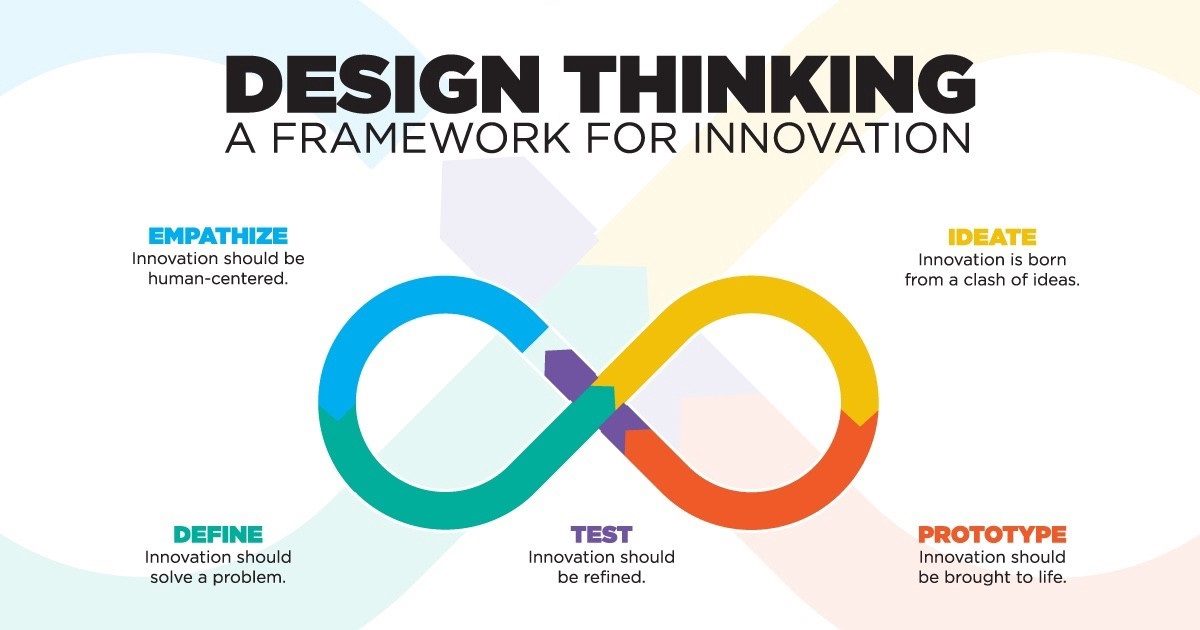
Unlike problem-based thinking, which tends to fixate on obstacles and limitations, the Design Thinking process is all about outcomes. It provides a non-linear series of steps that you can follow to come up with innovative, actionable ideas. There’s more to succeeding in business than developing a great product or service that generates a financial return.
Design Thinking: The key to catalysing AI innovation - People Matters
Design Thinking: The key to catalysing AI innovation.
Posted: Fri, 14 Jul 2023 07:00:00 GMT [source]
Make product decisions based on what your users need
In the “Inspire” phase, the team focuses on understanding users’ needs, behaviors, and motivations. The team empathizes with people through observation and user interviews to gather deep insights. This aspect is crucial in understanding the users’ needs, desires, and experiences to ensure that designs resonate on a deeper, more personal level. The team tests these prototypes with real users to evaluate if they solve the problem. The test might throw up new insights, based on which the team might refine the prototype or even go back to the Define stage to revisit the problem.
To dig deeper into design thinking, check out the library of design thinking resources shared by the Figma community. Brainstorm possible solutions using FigJam’s online collaborative whiteboard. Conduct in-depth user research to understand your target audience’s thoughts, feelings, beliefs, and actions. IBM was traditionally an engineering-led organization, but now it's shifting its focus onto design, working to spread a design culture throughout the business. Design thinking is a very flexible approach that works for companies of any size, from large enterprises to small startups.
Design thinking: 5 must-watch TED Talks - The Enterprisers Project
Design thinking: 5 must-watch TED Talks.
Posted: Mon, 28 Jan 2019 08:00:00 GMT [source]
Combine all your research and observe where your users’ problems exist. While pinpointing your users’ needs, begin to highlight opportunities for innovation. Conduct research in order to develop knowledge about what your users do, say, think, and feel. An interdisciplinary program that combines engineering, management, and design, leading to a master’s degree in engineering and management. Even the best ideas are wasted if you don’t implement them and learn from them for future improvements.
A portfolio is essential if you want to step into or move ahead in a career in the world of human-centered design. The design thinking process starts by looking at the needs, dreams and behaviors of people—the end users. The team listens with empathy to understand what people want, not what the organization thinks they want or need. The team then thinks about solutions to satisfy these needs from the end user’s point of view. Agile methodologies emphasize flexibility, rapid iteration and stakeholder collaboration.

Mural facilitates effective collaboration both in person and remotely, making it ideal for design thinking workshops for co-located and distributed teams. Plus, it has tons of ready-to-use templates (like the ones we listed above) to help you get started. In think aloud testing, users test out a product or prototype and talk through the relevant tasks as they complete them. You can use this template to record the feedback, insights, and experiences of your testers, and identify the success and failure points in your proposed solution.
Occasionally, a new way of organizing work leads to extraordinary improvements. That blend of tools and insight, applied to a work process, can be thought of as a social technology. Design thinking at its best happens at companies that leverage user insight to encourage customers to behave the way customers want, Schrage told Built In. The statement describes a product or feature that can realistically be built and assessed against strategic goals for growth. Use insights pulled from user research to identify user needs and challenges. This template helps you map out how an idea will work in practice, as a functional system.


No comments:
Post a Comment