Table Of Content
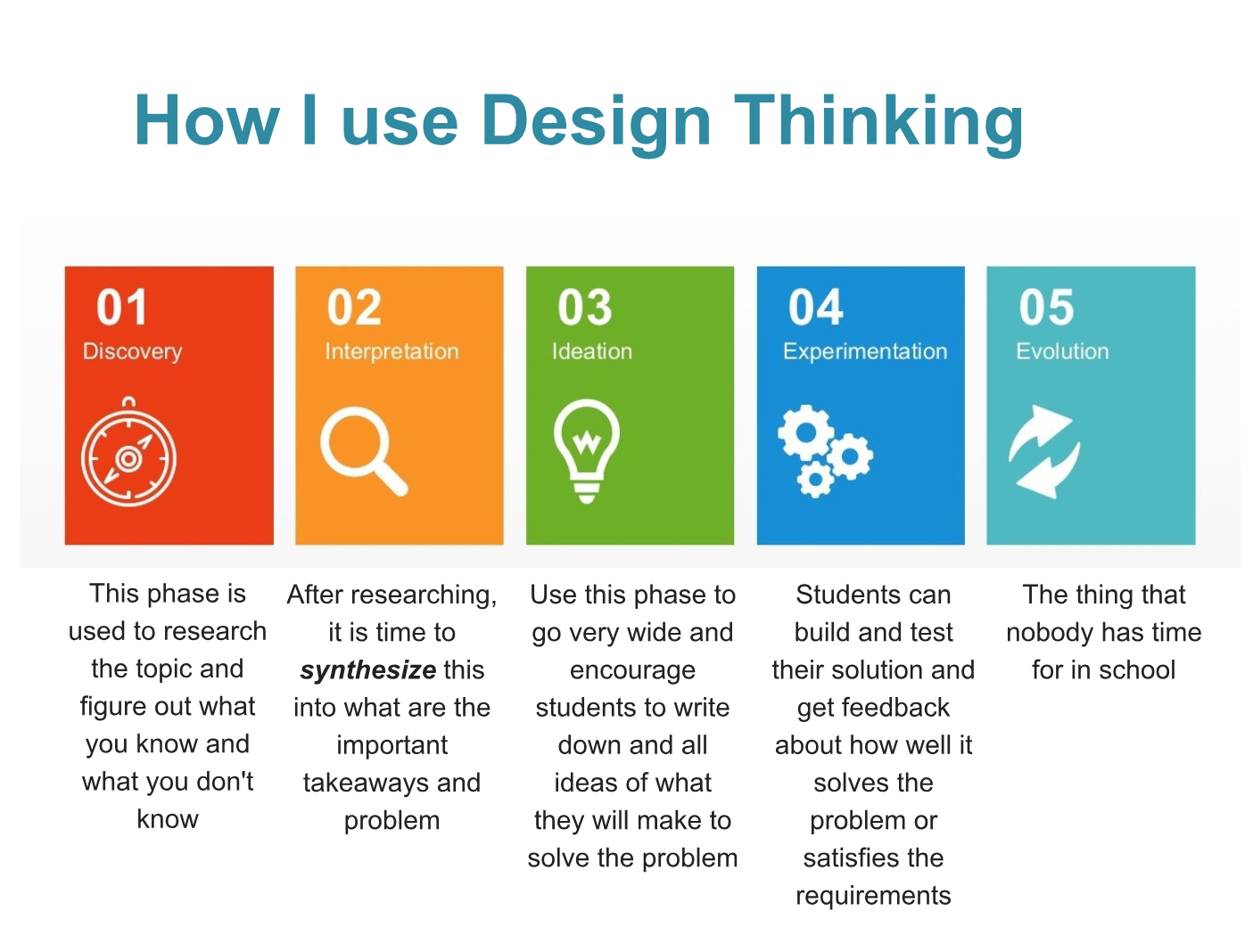
It also confirms that our work as a product development team has an impact, and is making our customer's lives easier.Hotjar helps us empathize with our users. It also confirms that our work as a product development team has an impact, and is making our customer's lives easier. When you explore solutions through design thinking, you do so based on human needs and user feedback. Throughout this stage of the Design Thinking process, you’ll continuously refer back to your problem statement. As you prepare to move on to the next phase, you’ll narrow it down to a few ideas, which you’ll later turn into prototypes to be tested on real users.
Introducing McKinsey Explainers: Direct answers to complex questions
Design Thinking is not an exclusive property of designers—all great innovators in literature, art, music, science, engineering, and business have practiced it. After prototyping comes user testing, but it’s important to note that this is rarely the end of the Design Thinking process. In reality, the results of the testing phase will often lead you back to a previous step, providing the insights you need to redefine the original problem statement or to come up with new ideas you hadn’t thought of before. This means observing and engaging with people in order to understand them on a psychological and emotional level. During this phase, the designer seeks to set aside their assumptions and gather real insights about the user. Startups may use design learning to gain a deeper understanding about their users and guide prototype development.
Learn More about Design Thinking
This hierarchical framework includes the Events level, Patterns of Behavior level, Structural level and, sometimes, the Mental Models level. Each level offers a unique lens through which IT developers can understand and address complex challenges. As a designer, you understand the importance of constantly improving your craft and honing your skills to create exceptional customer experiences.
Design thinking process 101: Definitions and approaches

But to unlock greater potential and to learn how to work as a dynamic problem solver, creative confidence is key. For IDEO founder David Kelley, creative confidence is the belief that everyone is creative, and that creativity isn’t the ability to draw or compose or sculpt, but a way of understanding the world. Now you know what design thinking is and how it can be applied to almost any context.
Co-evolution of problem and solution
Understanding design thinking can transform your team’s problem-solving approach — and how you work together. Here at CareerFoundry, we not only teach design thinking as part of our UX Design Course, but we also incorporate it in the way we work and make decisions. The majority of our users are adult learners who are juggling online study with full-time work, and so one of the biggest challenges they face is time management. Based on the design thinking framework, we conducted extensive user research, including an in-house time management workshop with real students. With these new insights, we redesigned certain aspects of our e-learning dashboard—such as how project milestones are displayed, for example.
The mission of the MIT Sloan School of Management is to develop principled, innovative leaders who improve the world and to generate ideas that advance management practice. As you’d expect, many large corporations have also adopted design thinking. IBM has adopted it at a company-wide level, training many of its nearly 400,000 employees in design thinking principles. In another example from the education field, Peruvian entrepreneur Carlos Rodriguez-Pastor hired design consulting firm IDEO to redesign every aspect of the learning experience in a network of schools in Peru. It was only part of the solution, but if the idea had been rejected outright, or perhaps not even suggested, the company would have missed an important aspect of the solution. “Most people don’t make much of an effort to explore the problem space before exploring the solution space,” said MIT Sloan professor Steve Eppinger.
Design thinking was supposed to fix the world. Where did it go wrong? - MIT Technology Review
Design thinking was supposed to fix the world. Where did it go wrong?.
Posted: Thu, 09 Feb 2023 08:00:00 GMT [source]
This is the final stage of the five-stage model; however, in an iterative process such as design thinking, the results generated are often used to redefine one or more further problems. You can then proceed with further iterations and make alterations and refinements to rule out alternative solutions. The ultimate goal is to get as deep an understanding of the product and its users as possible.
A complete guide to the design thinking process
To help you get a solid understanding of the problems you’re solving, you can ask a lot of questions to build empathy with your users. These will invite people to share their experiences and observations to help your team better understand the problem. Then, you can move on to some specific exercises for the empathy stage of the process. The goal of this stage is for your team to develop a user-centered vision of the core problem you need to solve.
What is the relationship between Design Thinking and UX Design?
If you’d like to learn more about putting the Design Thinking process into context, you’ll find a comprehensive guide over on IDEO.com. The ideation phase is a judgment-free zone where the group is encouraged to venture away from the norm, explore new angles, and think outside the box. You’ll hold ideation sessions to generate as many ideas as possible—regardless of whether or not they’re feasible! For maximum creativity, ideation sessions are often held in unusual locations. Customers now have extremely high expectations for design, whether it’s customer service, instant access to information, or clever products that are also aesthetically relevant in the current culture. For example, the transition from internal-combustion engines to electric-propulsion vehicles has highlighted emissions-intensive automobile production processes.
These stages are modular and do not have to occur in sequence — or even at all — and tend to work best at early stages of product development. Get hands-on, and start building prototypes of your most promising concepts. User testing can provide valuable feedback to help you validate and refine your prototypes.
Rather than talking about potential solutions, you’ll turn them into tangible prototypes and test them in real-world contexts. Since then, the design thinking process has been applied to developing new products and services, and to a whole range of problems, from creating a business model for selling solar panels in Africa to the operation of Airbnb. In design thinking, designers hold ideation sessions to generate as many potential solutions to an issue as possible. Design thinking can’t happen without ideation—after all, it is a solution-focused process. This course contains a series of practical exercises that build on one another to create a complete design thinking project. What’s equally important is you can use your work as a case study for your portfolio to showcase your abilities to future employers!
It encourages people with different backgrounds and expertise to work together and apply the designer’s way of thinking to generate innovative solutions to problems. People sometimes use design thinking and human-centered design to mean the same thing. HCD is a formal discipline with a specific process used only by designers and usability engineers to design products.
The outcome of each phase should be sound enough to serve as a guiding principle throughout the rest of the process and to ensure that you never stray too far from your focus. There are numerous reasons to engage in design thinking, enough to merit a standalone article, but in summary, design thinking achieves all these advantages at the same time. Put your prototype in front of real customers and verify that it achieves your goals. The goal of all the steps that come before this is to have the best possible solution before you move into implementing the design.
Systems thinking has applications in various fields, such as medical, environmental, political, economic, human resources, and educational systems. Start applying these methods to your work today with the Design Thinking template bundle. Béla H. Bánáthy, founder of the White Stag Leadership Development Program, created the “divergence-convergence” model in 1996. In the mid-2000s, the British Design Council made this famous as the Double Diamond model. Both methodologies rely heavily on collaboration among cross-functional teams and encourage diverse perspectives and expertise.


No comments:
Post a Comment